
Carbon Engine Cleaning
Remove harmful carbon deposits from your diesel engine's combustion system - restoring lost power, improving fuel economy, reducing smoke, and extending engine life.
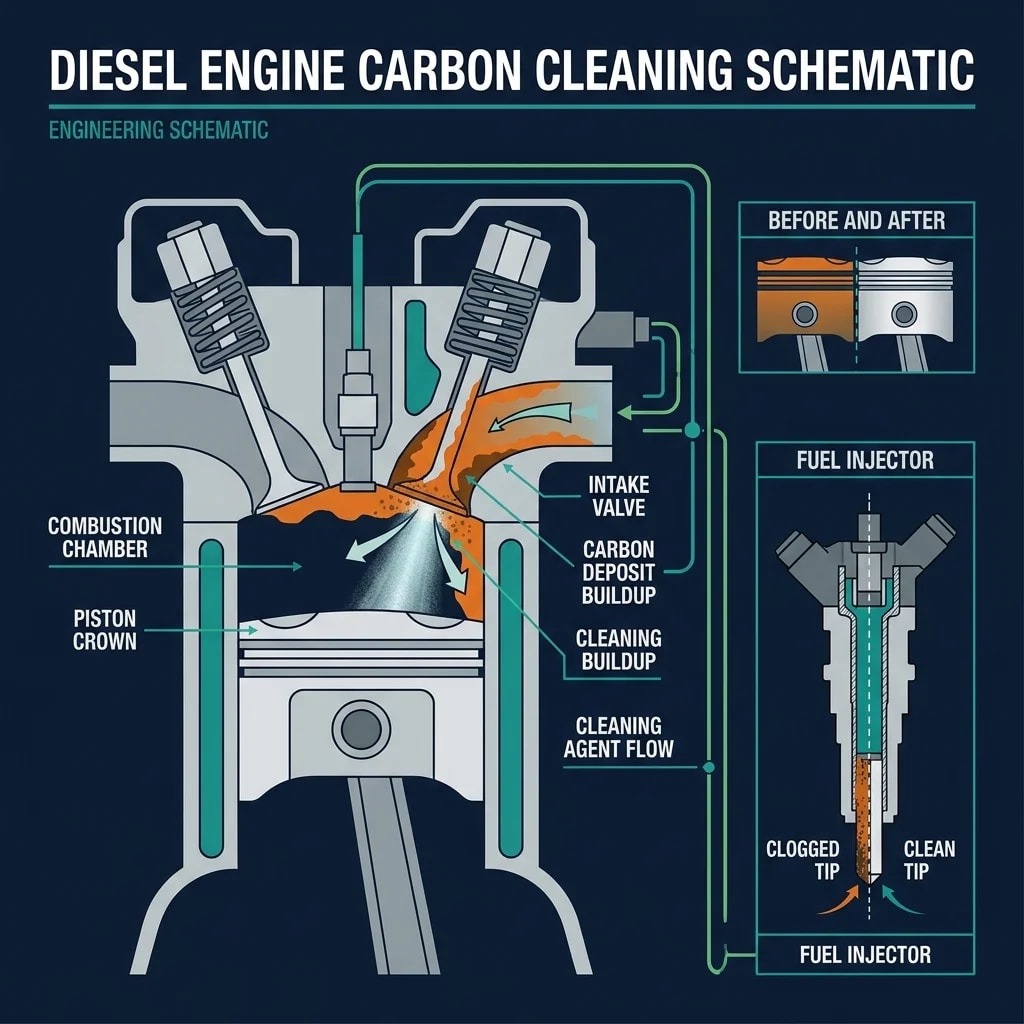
Professional Carbon Deposit Removal That Breathes New Life Into Your Diesel Engine
Carbon deposits are an inevitable byproduct of diesel combustion, accumulating over time on injector nozzles, combustion chamber walls, piston crowns, intake valves, and throughout the aftertreatment system. As these deposits build, engine performance degrades progressively - power drops, fuel economy worsens, smoke increases, and the DPF and EGR systems work harder than designed. Our professional carbon engine cleaning service targets and removes these deposits using advanced cleaning processes, restoring your engine to near-original performance without the cost of an engine overhaul.
- Removes carbon from combustion chambers, piston crowns, and cylinder heads
- Cleans injector nozzle tips to restore fuel spray pattern and atomisation
- De-cokes intake valves and manifold passages
- Reduces carbon loading on the EGR system and DPF
- Restores compression and combustion efficiency
- Safe, engine-appropriate process - no damage to seals, bearings, or catalysts
Benefits of Our Carbon Engine Cleaning
Industry-leading service backed by expertise, technology, and reliability
Restored Power
Removing combustion chamber carbon restores compression ratios and combustion efficiency - bringing back lost power.
Lower Fuel Costs
Clean injectors and combustion chambers mean more complete fuel burn - directly reducing fuel consumption.
Reduced Emissions
Less carbon in the combustion process means less soot and smoke output, and a reduced burden on the DPF.
Extended Engine Life
Regular carbon cleaning prevents the abrasive wear and thermal damage that uncontrolled carbon buildup causes.
How It Works
Our streamlined process ensures quality results with minimal downtime
Pre-Clean Assessment
We log engine data - fuel trims, injector corrections, compression, and smoke levels - to baseline condition.
Service Planning
Based on the assessment, we recommend the appropriate cleaning method and any complementary services (EGR, DPF, injectors).
Carbon Cleaning Process
Our professional cleaning process targets combustion chamber surfaces, injectors, intake, and aftertreatment system deposits.
Post-Clean Verification
Engine data is re-logged to measure performance improvement - fuel trim, smoke reduction, and injector corrections.
Report & Maintenance Plan
A full service report is provided with before/after data and a recommended preventive maintenance schedule.
Frequently Asked Questions
Common questions about our Carbon Engine Cleaning service
Carbon engine cleaning is the process of removing carbon deposits that accumulate in a diesel engine's combustion system over time. Every combustion event leaves a small amount of carbon residue - on injector tips, combustion chamber walls, piston crowns, intake valves, and throughout the aftertreatment system. Over hundreds of thousands of miles, these deposits become thick enough to measurably reduce engine performance, fuel economy, and emission compliance. Carbon cleaning removes these deposits, restoring the engine to near-original operating condition.
Common symptoms include: gradually increasing fuel consumption (often not noticed until compared to historical records), reduction in power and throttle response, increased exhaust smoke (particularly black smoke under load), more frequent DPF regeneration cycles, rough idle, injector fault codes, elevated EGT (exhaust gas temperature) readings, and in severe cases, engine misfires or piston ring fouling.
These are complementary but distinct services. Hydrogen engine cleaning (HHO cleaning) uses hydrogen-oxygen gas introduced through the air intake to clean internal combustion surfaces while the engine is running - it is ideal for light-to-moderate deposits and as a preventive maintenance treatment. Carbon engine cleaning is a broader term that may encompass hydrogen cleaning, chemical treatments, or more invasive cleaning methods depending on the severity of the carbon accumulation. Our technician will recommend the appropriate approach after assessing your engine.
Yes - significantly. The DPF is at the end of the exhaust stream and captures soot produced during combustion. An engine with heavy carbon deposits produces more soot than designed, overloading the DPF and causing more frequent regenerations and shorter cleaning intervals. By cleaning the combustion system and reducing soot production at the source, carbon cleaning extends DPF cleaning intervals and reduces the risk of DPF failure.
Yes, when performed by experienced technicians using appropriate methods. Our process is tailored to your engine type and does not use abrasive compounds, excessive solvents, or high-pressure methods that could damage precision injector tips, turbocharger seals, or catalyst substrates. We always perform a pre-service assessment and choose the method that delivers results safely for your specific engine.
The timeframe depends on the chosen cleaning method and the severity of carbon accumulation. Our hydrogen-based carbon cleaning (no disassembly) typically takes 2–3 hours. More comprehensive cleaning that includes injector removal and chemical treatment may take 4–8 hours. We will give you an accurate estimate at booking once we know your truck's details.
For most Class 6–8 trucks under normal highway operating conditions, we recommend carbon cleaning every 150,000–200,000 miles as part of a preventive maintenance plan. For trucks in city/stop-and-go duty, short-haul routes, or frequent idling applications, every 80,000–100,000 miles is more appropriate. The tell-tale signs that cleaning is due are increasing fuel consumption, more smoke, and more frequent DPF regenerations.
Ready to Book Your Carbon Engine Cleaning?
Expert service is just a call away. Choose your preferred way to connect with us and get your truck back to peak performance.